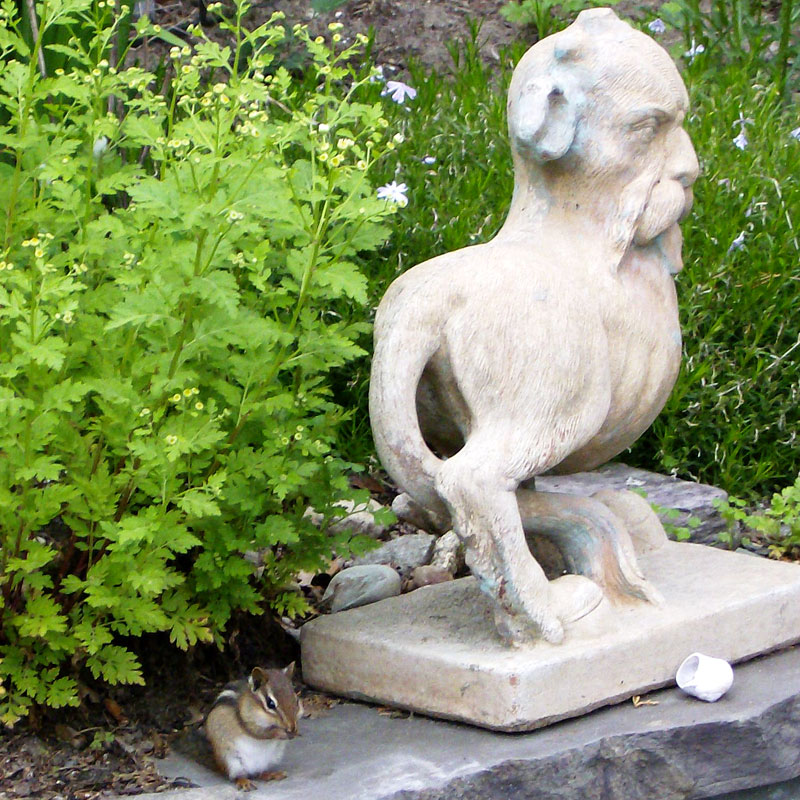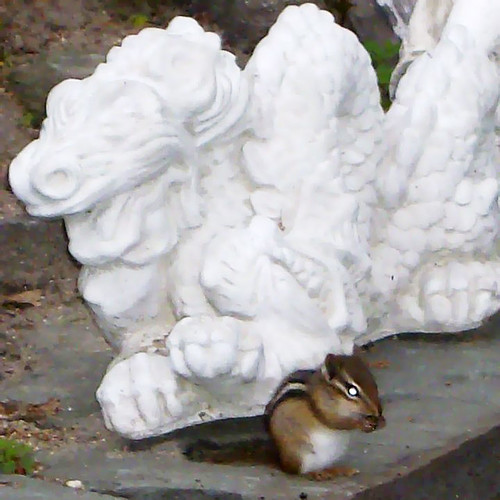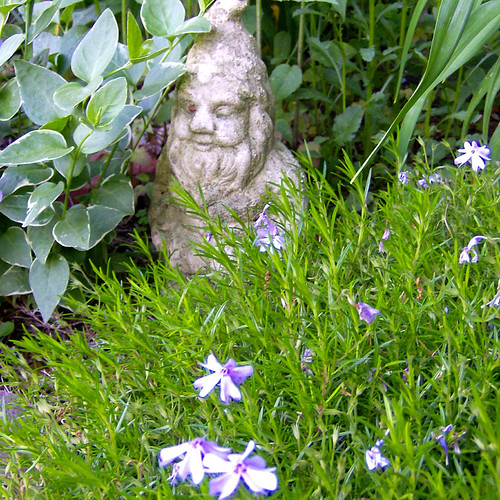
The one eyed garden gnome and other scenes.

I feel as old as dirt now but that’s okay because I really like dirt. I’ve been spending all of my free time playing in it. This has been an unusually cold spring and is turning out to be a ridiculously cold wet summer. I’ve been constructing a spiral garden. Stone creatures meet live critters for fun and mischief. Th garden is over-run with cheeky chipmunks. They tear through my compost, dig up my plants, steal shells, make holes in the stone wall, and torment Little Nemo. Who need TV?

New Friends

He shows his true face in this one.

Double Trouble

Post Sedum

Peeking Out

Berries

Spiral Garden

Clematis

Chives and Pinks

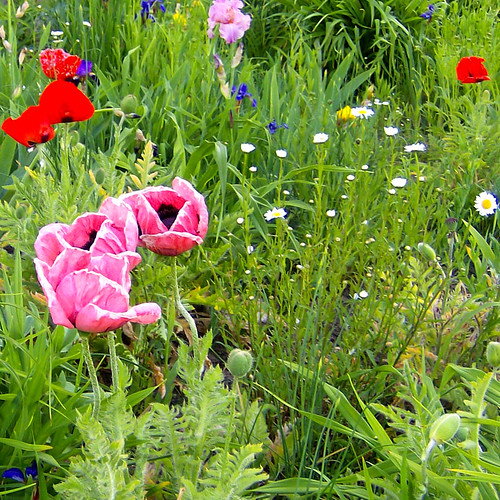
Poppies and Tulips

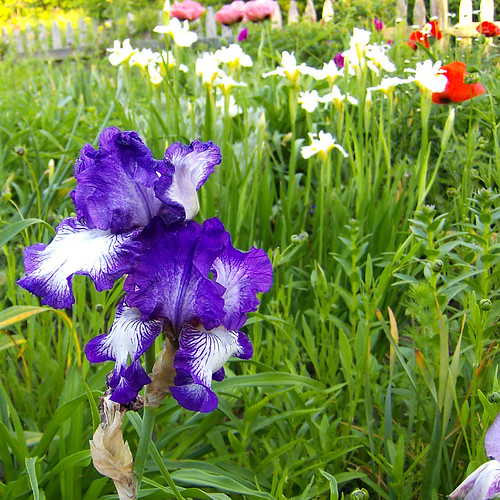
Iris

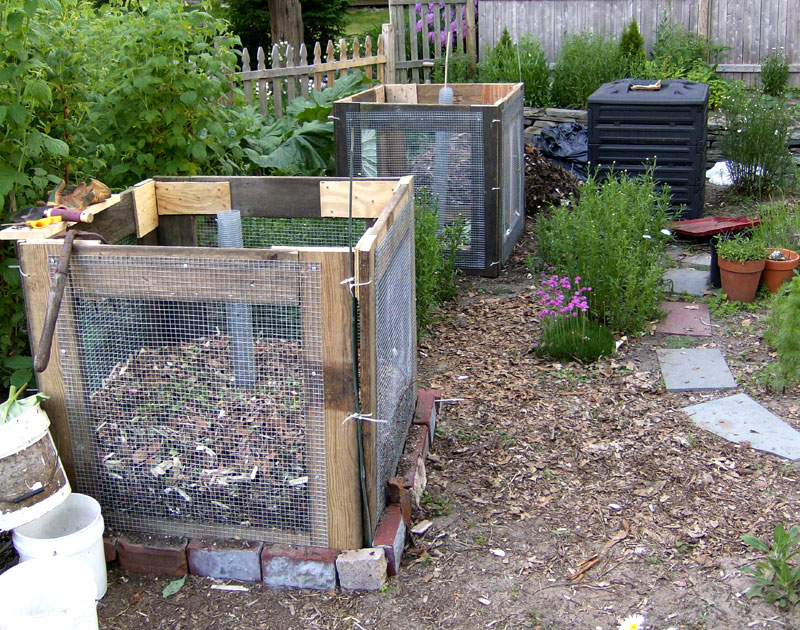
TheĀ  compost bins C.P. made for me out of our old deck wood.

Re-Cycling

Notes on The Young Reader

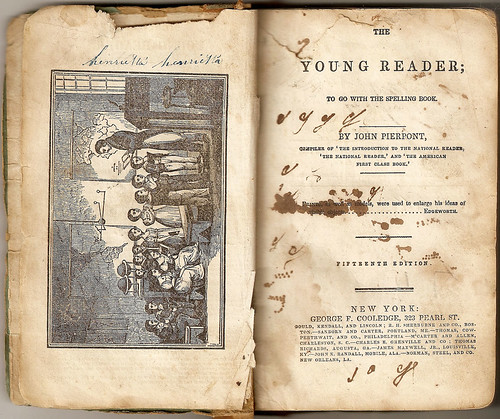
I have in my hands this small fabulous book from 1835 titled “The Young Reader”, so well rubbed in all the right ways that it is an artifact of sculptural elegance. The content is as fascinating as it’s current presentation. When I look through early readers such as this one, I don’t have to wonder why certain authorities seem determined to eradicate their existence.

The Young Reader

There are currently attempts to pass ridiculous “Nanny State” laws which seek the physical destruction of such wonderful objects and the complete removal of their content from circulation. The value of such a book is not just in the obvious charm of aged paper, a young artist’s scribbles, and whimsical yet technically proficient illustrations. The value is also contained in the artfully chosen collection of stories, poems, and lessons.

The lessons contained therein do not attempt to dumb down or disney-fy (Fie!) certain aspects of reality. There is an odd and effecting mix of grittiness and sentimentality presenting a common sense wisdom. The young readers are addressed with respect for their intelligence, potential, and emotional fortitude. They are assumed to be capable of learning self sufficiency. This particular copy was once owned by Henrietta Henrietta who seemed determined to master the letter “y” with sepia toned ink and a feather pen. She has delightfully decorated a wee treasure containing an eclectic mix of literature, fables, and moral tales which also happen to encourage basic reading and comprehension skills.

These older books have become popular with home schoolers and educators who are fed up with the neurosis-inducing thin skinned political correctness and vapid spiritless mind-numbing nonsense favored by our current system of education. Why would the gatekeepers of culture and so-called “education” feel threatened by this material? There could be lead in the books they so claim. Lead my left butt cheek. This is pure gold.

Whether it is because so few writers of talent have undertaken to furnish good materials for a compilation like this, or whether there is a great intrinsic difficulty in writing for children so as to be instructive without being dull, and simple without being silly, it may not be certain. But it is certain, that but a few writers have been happy in the production of pieces interesting and profitable to very young children. – John Pierpont

My child, what a good thing it is that you can read! A little while ago, you know, you could only read very small words; and you were forced to spell them all, thus c, a, t, cat; d, o, g, dog.

Now you can read pretty stories, with a little help, and by and by, if you take a good deal of pains, you will be able to read them without help.

When you can read in a book, by yourself, it will be easy for you to learn a good many things, and amuse yourself and your friends by reading, and make yourself learned, and good, and happy.

See here I have got a book, that has a good many stories in it, and a good many pictures, too, that will help you to understand the stories better.

The stories, and the verses have been made by some good friends of children. They knew a great deal, and wished to have all the little boys and girls have good books to read in, to make them wiser and better.

The first story in this book is about a foolish little lamb, that would not mind her mother. And the story is meant to show that little children, as well as little lambs, should always mind their parents, and seek their advice.

1835-reader-finside

1835-reader-binside

1835-reader-fcover

The full story of The Cats Who Went To Law.

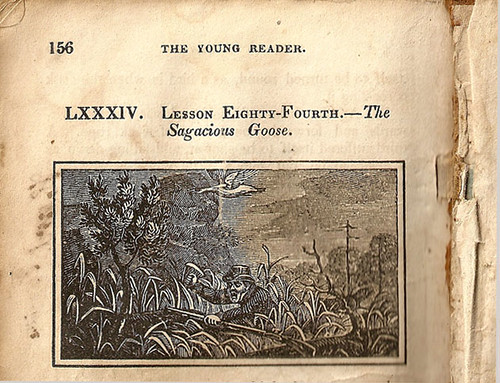
The full story of The Sagacious Goose.

The Sagacious Goose

The Sagacious Goose

I typed it as it was. (Hopefully) Note: emblematical, eyeing and under tone ?

The Sagacious Goose

Many persons seem to think that a goose is a bird that has neither wit nor wisdom. They laugh at the poor harmless animal and seem to consider it good for nothing but to be stripped of its feathers, for our beds, and to be roasted for our dinners.

Indeed the goose has become proverbial for its stupidity, and emblematical of a dunce; for we often hear a dull boy, or a simpleton of a man, called a goose; and the old proverb says, “If all fools wore white caps, they would look like a flock of geese.”

Now this is doing great wrong to this useful and valuable bird, which after all, has received from its Maker as much wisdom as it wants for its own use, and it sometimes has some left for the use of us owners.

The city of Rome was once saved from destruction by the cackling of a goose, which wisely kept awake when the army of the Gauls was going to attack it, and when all the inhabitants had foolishly gone to sleep.

And the story that I am now going to tell you, gives still stronger proof that a goose is sometimes a more sensible bird than he passes for.

“I have known one,” says Mrs. Hall,–” a snowy gander,–who formed a singular and devoted attachment to a gentleman, and never deserted his side, if he could avoid it.

“When the gentleman rode, the poor bird ran or flew after him. When he walked, it strolled along also; and refused food, even when pressed by hunger, except from his master’s hand.

“At dinner time he used to sit patiently outside of the window that opened upon the lawn, eyeing his protector; and standing first on one leg, and then upon the other.

“But the greatest proof of superior intellect that he evinced, was one afternoon, when following his master through some marshy ground that skirted a neighboring bog; the gentleman, trusting to his knowledge of the dangerous district, did not take heed to his way as he ought and presently found himself sinking into a bog hole.

“The efforts he made to get out, only sunk him deeper, and he must have been inevitably swamped, had he not crossed his fowling-piece over two fallen trees, one on each side of him, and held fast by that, although he had not strength enough to free himself from the thick mud, and the rank, tangled weeds.

“His faithful dog seeing his master in this dilemma trotted off for assistance; and the gander, after walking around him, stretching his neck, and cackling in an under tone, at length raised himself into the air, and flew round and round over his head, making, at the same time, the loudest noise that he could.

“This attracted some turf-cutters to the spot and the gentleman was extricated from the bog, before his servants, alarmed by Rover’s having come home without his master, had time to come to his assistance.

“Nothing could exceed the poor gander’s delight when he saw his friend again at liberty. He rubbed himself, like a cat, against his legs, shook his wings and cackled with much glee, and I can say that, for the remainder of his life, he was treated with that high respect which was due to his eminent services.”

I trust we shall hear no more from silly or mischievous boys, about the stupidity of a goose, until they will tell us how, if they had been in the situation of this gander, they would have contrived better than he did.

Lesson Eighty-Fourth from The Young Reader